

 Share the love —
When I began writing this text, I feared I would slip into my usual mode of anger, or into an exaggerated moralism that judges Beirut, my dearest city, with every cruelty available. I worried I would end up pitying her, wrapping her in melancholy and compassion. But as I kept writing, I reached a necessary truth: Beirut is a harsh city, and sometimes she deserves my harshness.
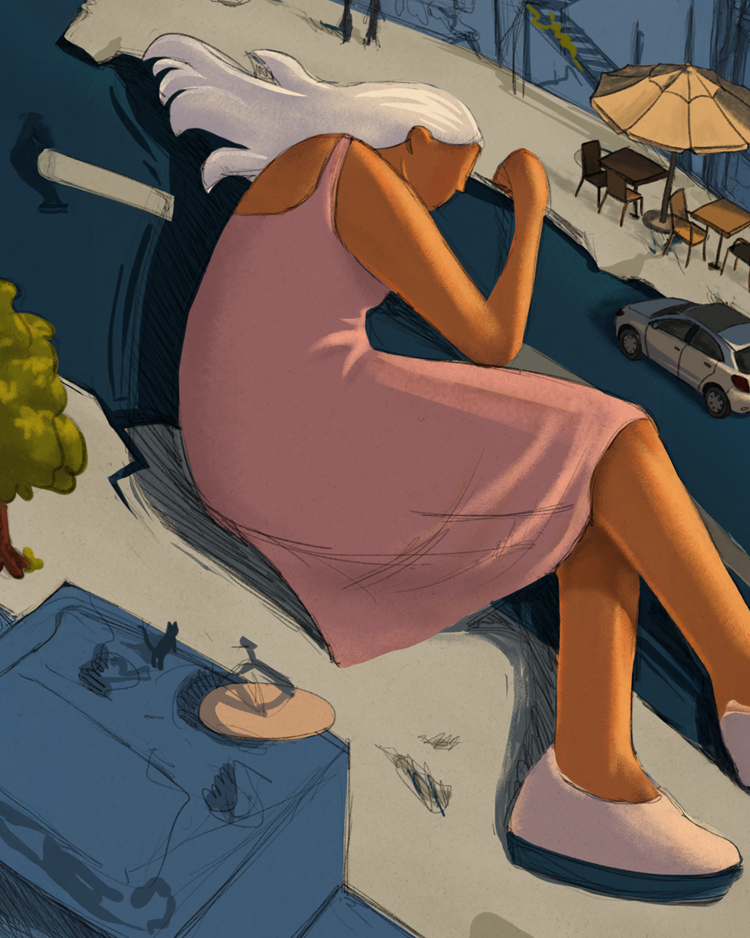
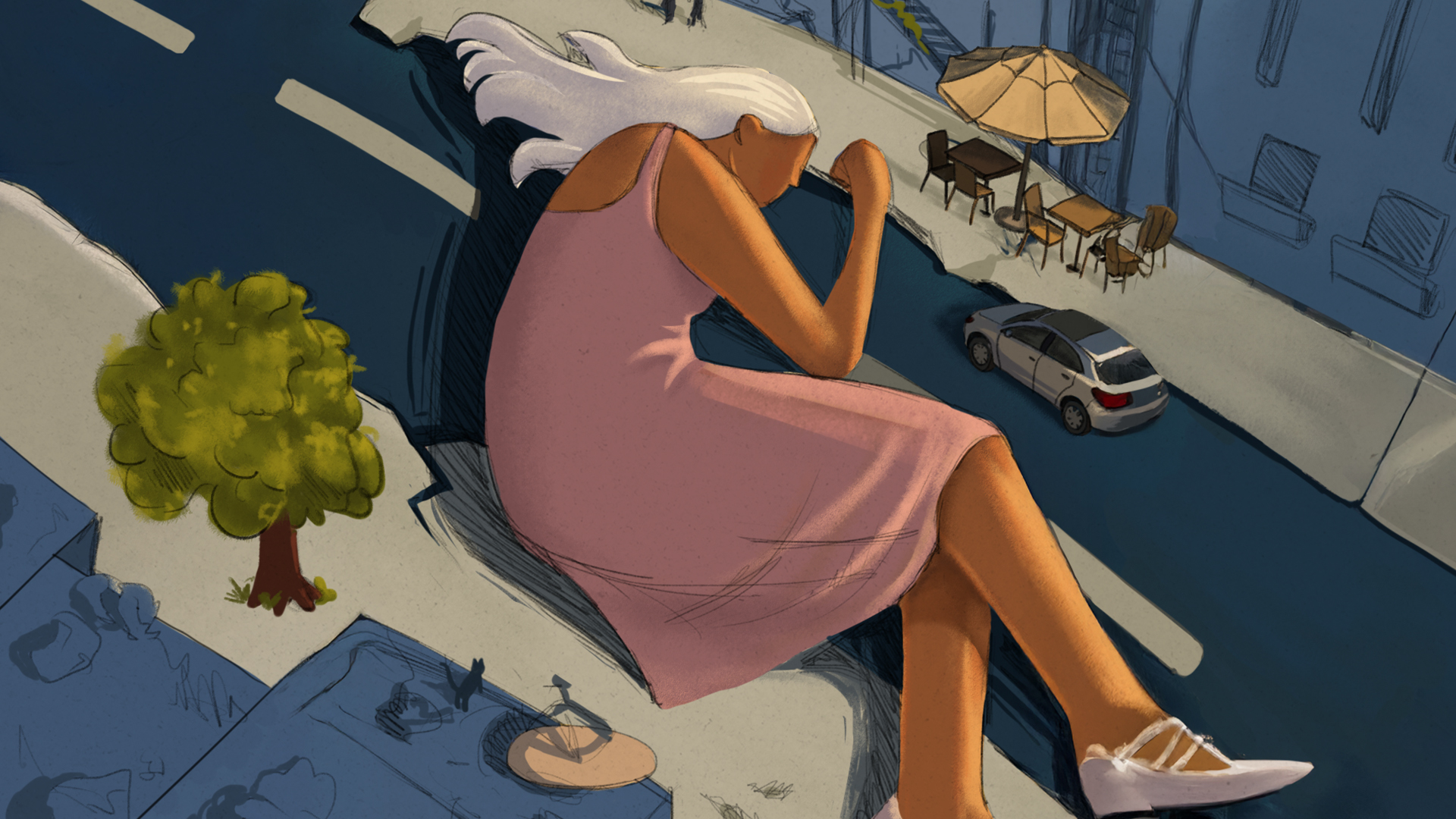
What is this city I love so fiercely, only for it to answer us with everyday cruelty? A city for which I put on my best shoes each morning, only to return with them torn by exhausted sidewalks. A “democratic” city, a “gateway” to modernity, that makes me hesitate to wear the black dress I love because someone might harass me, and no one would stop him. Will Beirut’s ground ever feel solid beneath my feet?
When I was 16, Beirut felt like a stage, a place you could measure by what it shows: storefronts, floating balconies, faces trained to conceal what cannot be said. Beirut corrected me quickly. A city is also measured from below, where no one looks. It is measured by what lies under your feet. The sidewalk is Beirut’s biography, written in pits, slopes, broken thresholds, and sudden endings.
I first understood the sidewalk is not neutral when a man treated my body as part of the street’s furniture: priced, available, and public. I won’t repeat his words. The quote matters less than what it authorizes: the old feeling that your body has been assigned to the street the way a bench is. In Beirut, walking is not just moving through space. It is agreeing, again and again, to the city’s terms.
As I grew, neighborhoods shifted, but sidewalks kept imposing their terms. On one street, I became fluent in three languages. The language of holes: a jump, a swerve, a recovered balance. The language of speed: cross before a motorbike appears behind you like an invisible bullet. And in the language of apology: sorry, excuse me, it’s okay – even when the fault is not yours. A forced apology makes you a temporary citizen, allowed to exist only if you don’t inconvenience anyone.
Beirut tells me to walk. But she never tells me where. Sidewalks begin and end abruptly, like cut sentences. They rise without reason and drop without mercy. They stay straight just long enough to lure you, then tilt against you. Measuring my day in steps, I find the city owes me curb ramps, streetlights, and an apology, plus the space stolen by café tables that treat the sidewalk as profit, not passage.
In big cities, anonymity can be a shelter; people pass without looking. In Beirut, everyone looks. They stare, whisper, and judge as if judgment were a civic duty. And the gaze is not evenly distributed. Suspicion arrives wearing “concern”: a flinch at dark skin, a different accent, a body that doesn’t match the city’s preferred mirror. Refugees move with raised shoulders, bracing for impact. Poverty is treated like a threat. Difference becomes an accusation without evidence. It doesn’t only come from checkpoints; it leaks from ordinary mouths and clings to sidewalks and cafés.
I move through Hamra, Gemmayzeh, Mar Mikhael, Badaro, places where the sidewalk sometimes remembers it is a sidewalk, then forgets. I watch encroachment grow like a habit. Two chairs, then four. A table, then barriers, pots, fences, until your path and your right are shortened. You press against a wall or step into the street, which barely recognizes pedestrians.
Mar Mikhael’s sidewalks look “beautiful” online, but in practice, they are narrow, like margins you are expected to live inside. Motorbikes climb onto the pavement as if it were natural. They don’t slow. It is as if traffic law has no language here.
On one afternoon, I try to pass on the sidewalk in front of a café, but a waiter steps in my way and lifts his hand. There are tables on the pavement, he says, so I cannot walk here. I should go around. Around means into the street. Around means between cars and motorbikes. Around means my body must reroute itself so the café can keep its extra chairs.
In that gesture, the sidewalk stops being a passage and becomes seating. Public space is managed like a favor, and I am the one asked to apologize for needing to pass. Encroachment has its own rhythm. A table becomes a wall. Flowerpots become a fence. An entrance narrows the path until your shoulders turn, until your bag brushes the wall, until you begin to apologize for existing in a space that was supposed to be public.
Diplomacy becomes blackmail: squeeze through and swallow the look that says, what do you want, or step into the road and hope the cars are in a generous mood.
I remember a friend who uses a cane once said, with a heavy laugh, “Beirut hates the cane.” It wasn’t a joke. It was a field report. She doesn’t say “accessibility” as a concept, she lists obstacles like coordinates: the curb with no ramp, the ramp too steep to trust, the tile that tips, the threshold that swallows wheels. Sidewalks here aren’t designed to be used, only displayed or neglected. And when sidewalks close for construction or utility works, there are no alternative plans, as if the city is saying: whoever cannot stay home.
Beirut is not a giant, fast cosmopolitan metropolis, yet she can still crush her residents. Slowness does not absolve cruelty. Stagnation can produce anxieties as sharply as those produced by speed.
That is why I return to walking as a method. I walk and record, not only as a writer but as a witness. In one day, I realize I have built “desire paths” that don’t match maps. I detour because the lighting is weaker, take longer routes because sidewalks are wider, avoid corners because cafés have taken over, and switch sides because a motorbike has climbed onto the pavement.
I stop at a traffic light that doesn’t work. It has been dead long enough that no one expects it to revive. A woman carrying bags waits for a gap in the cars, like someone waiting for permission to live. I help her cross. We walk together for 30 seconds and part without names. Beirut creates quick alliances, strangers conspiring to make it through. When the pavement disappears, we become each other’s pavement.
At home, I look at my shoes. The finest shoes lose to sidewalks that refuse repair. And I think maybe the problem isn’t the shoe, but the idea that we must dress for survival instead of demanding the city fix what we need to live.
I have not stopped negotiating, but I am tired of a diplomacy that does not recognize us as full citizens, tired of apologies that arrive before I do, tired of steps being my only map. I want, very simply, to walk in Beirut the way people walk in cities that respect their feet: without asking permission, without being punished for choosing a black dress, without coming home each evening to count my losses in a torn shoe.