

 Share the love —
Being in your 20s seems to be a delicate dance between making sense of love and loss and the thread braiding both to one’s selfhood and life. Losing friendships, losing relationships and finding them in our 20s is a cyclical route to self-discovery.
The lessons we learn in heartbreak, romantic, platonic and otherwise, guide us through our lives; and being in my 20s has revealed to me how the power of our friendships is truly the embodiment of all that is truly intimate about our souls; the deepest reflection of who we are.
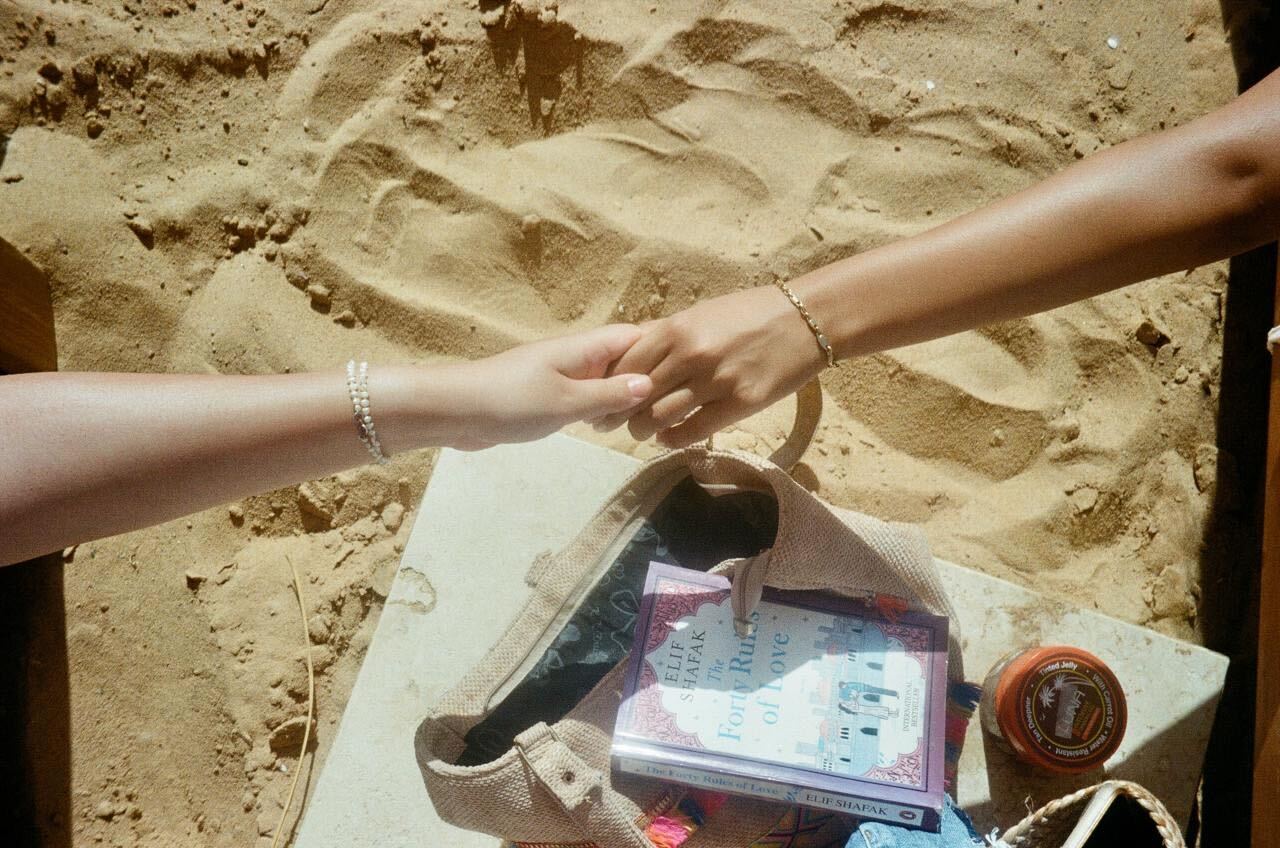
Friendships – female friendships to be exact – are an embodiment of something sacred, a space and a language that is narrated between women to make sense of the world around us and of the reality of being a woman; through the pains and hopes of making sense of our lives.
They are that space where care and love and compassion are gifted with no expectation of reciprocity, but it always comes back ten-fold. It is the highest example of how girlhood shapes us into the women we carry into our formative years. The friendships we have in our formative years always shape us into the women that either carry them or learn from them.
I am inspired to write about these friendships that I have witnessed around me from my best friends, who have supported me through my quiet and somber seasons to those who have helped plant seeds to support our mutual growth, and those who have continually found ways to alleviate my grief.
I am eternally inspired by my late mothers’ friends who are the first to call me on her birthday and her best friend who has had her picture as her wallpaper for 8 consecutive years and calls her her sister. It is those friendships that are able to blur the lines of familial bonds with that of a “friend.”
With that preciousness also comes the cost of laboring in our friendships and calibrating what friendship means: What is the manual for being a good friend and what do we owe each other in this relationality?
We often do not acknowledge that friendships require the same caliber of work and attention as other relationships. We often relegate our ultimate forms of care and love to thinking of or being in romantic relationships. This way of interacting with friendships as a placeholder until we reach what seems to be a higher or ultimate destination of love subsumes our understanding and being in communities that are sustainable and fulfilling.
I believe the dissonance between this cost and what is offered by those around us often complicates our relationships, where our expectations meld with what is presented to us, which has made me question when do friendships fail? Is it only significant to question our friendships when they are on the verge of failure? What do we make of our places in those friendships and how do we build our communities around those friendships?
The cost of our friendships is influenced by several extraneous and intrinsic circumstances and is often mitigated by our increased sense of belonging and community. Those circumstances complicate how we show up in our friendships, including experiences of loss, grief, conflict, displacement as well as mental or physical disabilities.
There are a plethora of factors that complicate our identities, and, in turn, complicate our own requirements for friendship and community. Some of us have higher expectations of those around us, of the way our communities ought to show up for us and grant us the space and care we require. I witnessed years-long friendships fail under the guise of miscommunication where, in fact, it was a result of accumulated conflict and mismatched effort that took a toll on the friendship.
Our communities gradually become the lifeline well into our adulthood. We become tied by chance; not by blood, but by shared values, interests, and genuine care and love. The soul tie between friendships is often more complex, even though it may seem like the stakes are much lower. There is no clear-cut social contract that binds friendships together, unlike marriage, family, siblings, or even colleagues. It appears seemingly more laissez faire, when in reality those relationships oftentimes require more effort, commitment, time, and attention.
We owe our friendships the same levels of care and reciprocity of love as our romantic relationships. Perhaps being in our 20s is not merely about learning who we are in relation to love, loss, and becoming, but about learning how to remain and how to stay with one another. It is about learning how to build friendships that are not placeholders, not transitional shelters on our way to something else. Our friendships are destinations in and of themselves.
To love our friends is to choose them deliberately and to commit to their becoming as much as our own. It is to accept that friendship, like any other form of intimacy, requires tending, repair, recalibration, and sometimes grief. It requires presence, accountability, and the humility to learn how to continually become and do better.
In honoring our friendships, we are not simply nurturing our communities, we are rewriting what intimacy looks like. We are resisting the idea that romantic love is the ultimate site of meaning and, instead, affirming that care, devotion, and lifelong kinship can and does exist outside of it.
My mother’s friendships did not end with her life. They continue to live within the women who still speak her name, still call me on her birthday, remember her in their prayers, and carry her as family. In them, I see the kind of love that does not expire and the kind of community that outlives us.
And perhaps, this is what our 20s are really asking of us, not only to find ourselves, but to learn how to love one another in ways that endure.