

 Share the love —
There’s a particular kind of whiplash in watching something your grandmother has done your whole life suddenly show up on your For You Page, created by someone who’s never set foot in the region, captioned like it’s a discovery.
When practices like sacred coffee rituals, shots of olive oil, or henna drawings on hands and feet become part of mainstream culture,, they’re often stripped of their historical and ancestral context and meaning.
As Arabs, we are now seeing our culture represented more positively but there is an inherent bias embedded in trending culture, where something only becomes valid or interesting once Western audiences adopt it, which in turn marginalizes the communities who have preserved and passed down these practices, often under colonization, occupations, and genocides, that works to kill and erase people and their culture, with Palestine and Syria being pointed examples.
There is a selective borrowing that allows mainstream culture to take the aesthetic or functional appeal of these practices while simultaneously othering or marginalizing the people they are indigenous to.
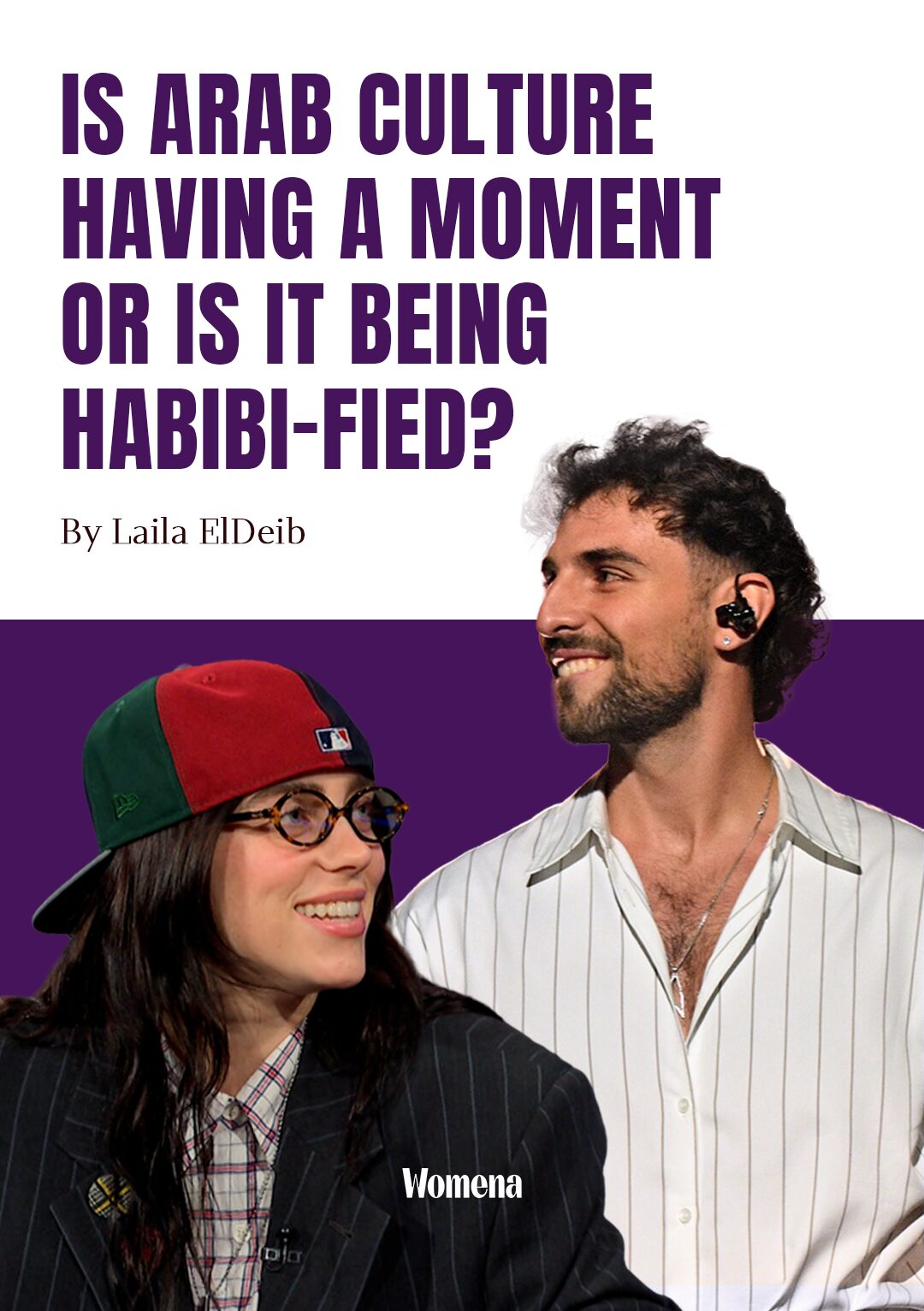
Suddenly, Billie Eilish loves Nancy Ajram, Anne Hathaway is going to live a long and healthy life, inshallah, partygoers everywhere are blasting the hit song “Ahla Lela Ahla Nas,” and even Elmo says habibi.
For decades, the only story the world was allowed to see was one of devastation, as if suffering was the sole lens through which we were allowed to be seen or understood. The current moment says something different: We contain multitudes, that joy and grief can exist in the same breath, and that our humanity has always existed. We create art, we laugh, we cry. We can label this as progress or we can call it what it truly is: the dehumanization peddled by global politics and mainstream media is being ripped at the seams, not as a gift to us but as the reality that has always been forced out of the spotlight.
It is refreshing to see Arab culture seeping through random pop culture moments in fun, digestible ways that are memeified, shared, and enjoyed, rather than through tedious, empty political speech about representation and diversity. Maybe that’s the quiet, radical part, refusing to wait for the war to end before we let ourselves, and let the world see us.
The question then becomes how do we move forward? What does the future of Arab influence look like? How do we use these platforms and stages? How do we prop each other up?
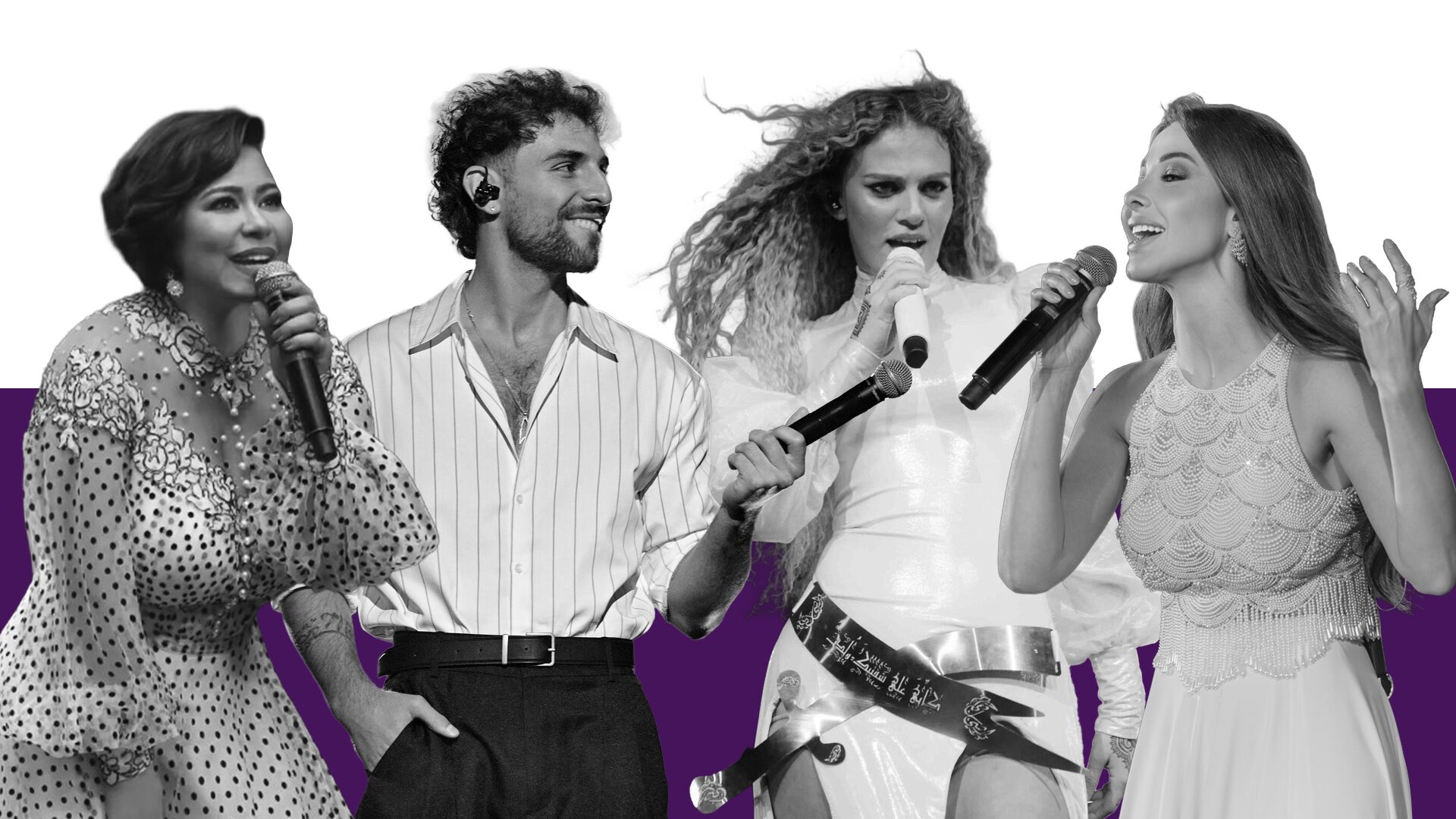
It might look like Egyptian pop star Sherine Abdel Wahab’s 2000s hit song “Sabry Aleel” going viral and getting the full Tik Tok treatment with choreographed dances, remixes and all.
It could be Elyanna, Saint Levant or Huda Beauty amassing a global audience and dominating new markets. Elyanna, a Palestinian-Chilean singer, made history at Coachella 2023 as the first artist to perform a set entirely in Arabic. She merges pop beats with the oud and frequently wears the Keffeiyeh, a symbol of Palestinian resistance, in performances around the world.
For now, the Arab culture being celebrated is still a filtered, palatable version, so maybe the door has opened but only wide enough for certain people to walk through.
There’s a pattern here worth naming: What’s making Arab culture more digestible right now isn’t that the West has developed a deeper curiosity for the region, it’s that the packaging has changed. Arab “things” are breaking through because they’ve first been filtered through a lens of Western aesthetic.
It is becoming harder for me to develop one firm stance on how I feel about each example. Am I happy and proud that our beautiful Arabic culture is being enjoyed by more people around the world? Short answer: of course. Do I feel like our culture, our people, and our history is being fully appreciated as a result? Not really.
It is important that our traditions are not absorbed into Western aesthetics and forever forgotten. It’s also important that the first word that comes to mind when asked about the region is not always war or conflict. I’m not expecting everyone to know the region’s full history or language, but maybe next time the internet thinks of the region they can think of a wonderful food they tried, or of new words they’ve learned: Yalla, habibi, Inshallah.
A recent clip of Anne Hathaway saying “inshallah” went viral with people from all over the world either praising the actress, wondering what it meant, or debating whether she’s even allowed to say it.
Maybe Anne’s inshallah is a reflection of the mainstreaming, but could it also represent the potential danger of having A-list (non-Arab) celebrities be the first brush with the phrase, or the immediate reference (non-Arabs) now have. We should be able to tell our own stories, and we should be able to represent ourselves on the red carpet.
It’s not about seeking validation or approval from the West, it’s about demanding that credit is given where it’s due. That we also get the relatability and, dare we even say, loyalty or affinity when things are not as fun and meme-friendly. Will Anne, for example, call for an end to the genocide inshallah?
It is important that future generations are able to shape their own narratives instead of forever fighting their way out of the ones imposed on us.
Which brings us to our own communities and narratives, and it’s time to look inward with honesty. There is still a debate about what stories are important enough to share. A recent dis track dropped by Palestinian rapper Shabjdeed criticizing Palestinian-French-Algerian singer-songwritier Saint Levant brought this debate to the forefront: Who can claim Palestinian identity? Who can represent it and how? Is there one correct way? Why is all this even relevant?
Which Palestinian voices does the global entertainment industry choose to elevate? Do certain narratives sell more easily? Who gets to define Palestinian identity on the world stage? Is there a more natural pull toward artists who are palatable to international audiences vs artists whose work speaks directly to the lived reality of decades of occupation and genocide?
On a different level, we’ve seen the TikTok trend of drinking a shot of olive oil to start the day, when Palestinians (and Arabs) have always known the health benefits of olive oil, and it is a cherished part of our culture and kitchens.
Olive oil isn’t a trend, it’s in our kitchens, medicine cabinets, and rituals of care, passed down the same way a grandmother’s hands pass down the knowledge of when the fruit is ready to press. In Palestine especially, the olive tree carries a weight far beyond nutrition. Its roots can outlive empires, some trees standing for centuries, watching over land that has been fought for, stolen from, and returned to again and again. Which is why the olive tree has become an important symbol of Palestinian resistance, and why it is the very thing the occupation sets fire to.
Tending to an olive tree is at once an act of memory and defiance, a declaration that the land and the people who belong to it are still here.
When a wellness trend flattens all of that to a 15-second clip, stripping it of history, of the hands that harvested, the soil it fought to grow in – it isn’t just missing context, it’s erasing decades of heritage and defiance.
Arab women wearing henna might face stereotypes, but a festival-goer wearing it is seen as trendy. Anne Hathaway is praised for wearing what can only be described as a burkini, but it’s only ever been framed as oppression on Muslim women, and wearing the hijab is still illegal in France. This cannot just be brushed off as ignorant double standards.
That’s what whitewashing looks like in practice, at times a nihilistic erasure, at others a quiet editing out.
The culture becomes consumable, but the people it belongs to remain invisible. That’s why it isn’t enough to simply be seen, we have to insist on being seen accurately, on our own terms, with the full context intact, and refusing to let our culture be enjoyed while our lived reality is ignored.
So yes to more Arab moments and catchy songs going viral, and yes to Arab culture inspiring us all – but let it be that: Arab moments in their full context and glory.