

 Share the love —
Before you read any further, I ask you to challenge the urge to assume that I’m a man-hater or that this is about some kind of gender war. I invite us to unpack the many questions we often forget to ask, namely: Who makes the world we live in so terrible?
Today’s world is so politically polarized that we must constantly choose between opposing perpetrators of violence. Being at a loss for words as we collectively witness the worst atrocities of our time along with the falling facade of international legal and political frameworks may not be a unique experience. Recently, however, I’ve been thinking a lot more about whether we play a role in legitimizing perpetrators by not questioning who they are, what they have in common and what makes them so comfortable in creating a world so terrible?
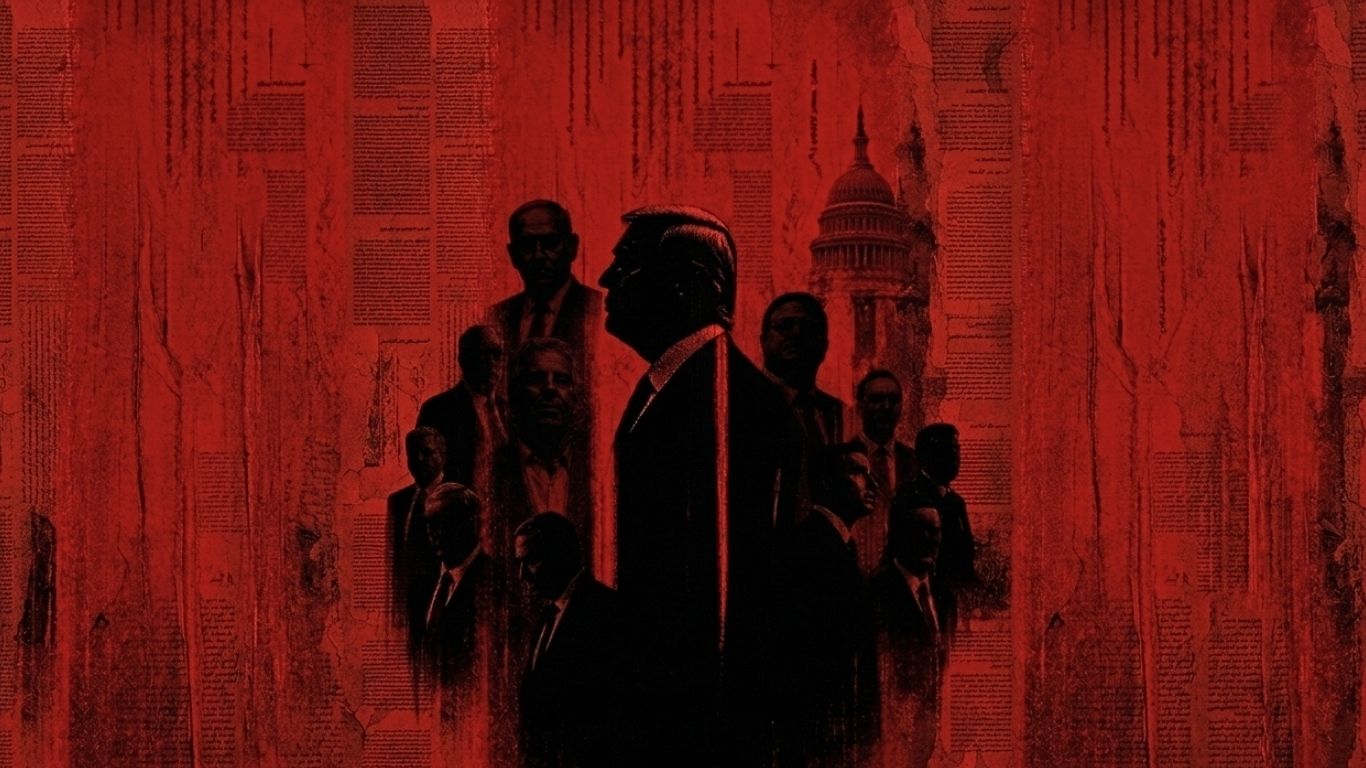
The truth is, whether you’re a nationalist who oppresses their own people, or an imperialist who seeks world domination by killing those you’ve deemed inferior, the perpetrator is more often than not a man.
Let me walk you through some surreal scenes that continuously haunt my mind.
Israel killing more than 2,000 Lebanese people since March 2026, while displacing 1.2 million, and essentially occupying more than 55 towns in South Lebanon by establishing a “no-go” zone during a 10-day ceasefire. As a Lebanese, this reality shakes me, however, I’ve run out of ways to condemn the injustice, the illegality of these killings and the occupation of our lands. I do have a lot more to say about who perpetrates this injustice and the never-ending cycle of violence.
Ben Gvir carrying a bottle of champagne to celebrate pushing Israel’s newly expanded death penalty law towards Palestinians, who live under violent apartheid while consistently being told they exist within a thriving democracy.
Netanyahu leading a livestreamed genocide for three years straight, in plain sight and blatant disregard of any international laws, and no one is able to or wants to stop him. More than 70,000 Palestinians have been killed, more than 20,000 of them are children. (These are estimates, and real numbers are believed to be much higher.)
Trump insulting journalists, calling them stupid, fake news, making fun of or making passes at female reporters, and diminishing anyone who asks him the right questions. Trump suddenly dismantles USAID, causing catastrophic impacts on global health and refugee support, without thinking of or suffering any consequences. Trump starting wars and enabling war-mongers. Trump wants to turn Gaza into a real estate project on top of obliterated bloodlines. Trump again and again and again…
Then there are nationalist extremist leaders who put their own people at risk, which can be found within Hezbollah, in leaders like Bashar Al-Assad, in systems like the Iranian regime.
We reach another level of globally interlinked atrocities with the notorious Jeffrey Epstein, a convicted sex trafficker of underage girls whose unsealed files name more than 150 powerful men in his orbit. The men who rule and build our world.
Here lies a clear link between political and financial structures, with capitalism being both the umbrella and the underbelly of militarization and global violence.
To draw these scenes can feel redundant, we are already inundated with them throughout our every day, they are made all too accessible with a periodic doomscroll, but I turn our attention to one seemingly silly question: Why are all their leading characters men?
We could also ask: Who has more power to violate more rights? Who leverages capitalism to its most detrimental extent?
But I have simpler questions: Why is it that men are always the ones occupying other peoples’ lands? Why is it that men are the ones who kill and sexually assault children? Why are most criminals, weapons holders and dealers, and corrupt leaders men? Why are men always behind decisions that doom our futures?
Why are those who make women feel unsafe and harass them in the streets, men? Why are global decision-making structures centralized with men? Why are economic systems rooted in men’s irrational and greedy decisions? Why are most political leaders men?
What Enables the Cycle of Men’s Domination?
This is not to say that women have never perpetrated violence, nor to imply that there is an inherent male inclination towards evil; instead,it is about a patriarchal system that claims to be too complex to be questioned. In this context, to what extent do we normalize this very structure every time we refrain from questioning it?
I see the cycle of men’s domination flowing in this progression: impunity, normalization, forgiveness, representation, financial and political power, repeat.
Upon making a devastating mistake, say, enacting a genocide that kills thousands of people, the world is expected to turn to the safeguarding frameworks created to hold such perpetrators accountable. These frameworks are meant to manifest through binding laws, worldwide condemnation, and eventually accountability through trials and imprisonment by globally legitimized entities.
In theory, this is a workable system that can safeguard the world from the wills and desires of evil powers. But what are the systems we actually have? Ones architected by men who are also the dominant power players, and in this reality, the frameworks are weaponized to ensure the opposite of their mandated intention: impunity enabled and protected by other men on their own seats of power who would like to avoid facing the same consequences.
When we fail to condemn a criminal for their wrongdoings, or to hold them accountable, we repeat what historian and philosopher Hannah Arendt calls the “banality of evil.” As she explains, evil is not a “monstrous aberration,” but is something routine, enabled by ordinary people who simply go along with the different ways it manifests.
To consider something banal is to agree that it is unremarkable or insignificant. If some of us agree that what we have been witness to in the last few years is unremarkable, then we may have inadvertently done these men the favor of facilitating their cycles of violence through normalization.
Forgiveness is the next step, according to the named cycle – from small, micro levels to global, political scales. Our own forgiveness plays a key role in feeding the pattern’s propagation. In patriarchal societies, families are conditioned to forgive men for their wrongdoings, in stark contrast to how the same society treats missteps by women. A man who cheats or physically assaults, and decides he is to be forgiven under the label of “just being a man.”
From the narrow and subtle image of a man forgiven for not doing the dishes while a woman carries the burden of substantially more housework, the same patriarchal reflex repeats itself in the largest positions of power.
From here, the cycle progresses more easily with every validation and praise: re-election, populism, financial and political support from benefactors of the system.
Men, therefore, end up building frameworks where they are constantly forgiven and empowered to make decisions on behalf of society. Capitalistic systems serve to further embolden and fortify, making it incredibly difficult to untangle and question the problematic structures at play.
If we accept that those who created the problem are those meant to find solutions for it, then what is the responsibility and consequence of acceptance?
Structural violence, as defined by sociologist Johan Galtung, is harm built into the system itself, requiring no individual villain to keep it functioning. By creating a system that is unbreakable and untouchable, these same men make it difficult to challenge one individual villain. In this spiral, any individual’s violation becomes a favor to another man who’d also like to escape accountability. Violence is therefore legitimized and forgiven, even by political opponents who find one man’s atrocity an open window to their own future exoneration.
From here, any enabler to the normalization, forgiveness, and escape of perpetrators becomes a participant in building a structural violence that is meant to be perceived as unquestionably complex.
Can We Ever Break This Cycle?
To break this cycle, one would need to begin where healing from any toxic grip begins: acknowledgment. However, simply saying acknowledgment as a general phrase can risk hiding behind further structural violence that gives every perpetrator a free pass.
What I mean is the kind of acknowledgement that names these leading characters loudly, persistently, unwaveringly so that there is nowhere to hide and no structure to hide behind.
We know who these characters are: who carries the champagne bottle in apartheid, who signs off on the killing of children, who has tortured and displaced thousands for decades. When do we name them? When do we stop offering the patriarchal reflex of forgiveness, a re-election, a gentler line of questioning in an interview, and the “just a man” pass at the dinner table?
To refrain from offering forgiveness to those who haven’t earned it is more than a human reaction to the world’s violations, it is the only pathway to breaking a cycle of perpetual injustice.
I do not pretend to have the alternative representation fully drawn out, but I am certain that those who have not been marginalized cannot be trusted to draw it themselves. The children, women, minorities, and communities who pay the costs of cycles of violence have been giving us alternatives for a long time, but then we must question who holds them back from taking space, owning power, and enacting these alternatives?
Refraining from offering undeserved forgiveness begins with better lines of questioning in courtrooms, international media, and electoral polls as well as in offices, in homes, in community. The patriarchal world has survived centuries and consistently shown us its intentions, so isn’t it about time we do our best to call it out at every turn and dismantle the real structures behind men in power?